

From Classroom Chaos to Calm: How Learning Zones Transform Early Years Environments
Reading time: 4 minutes
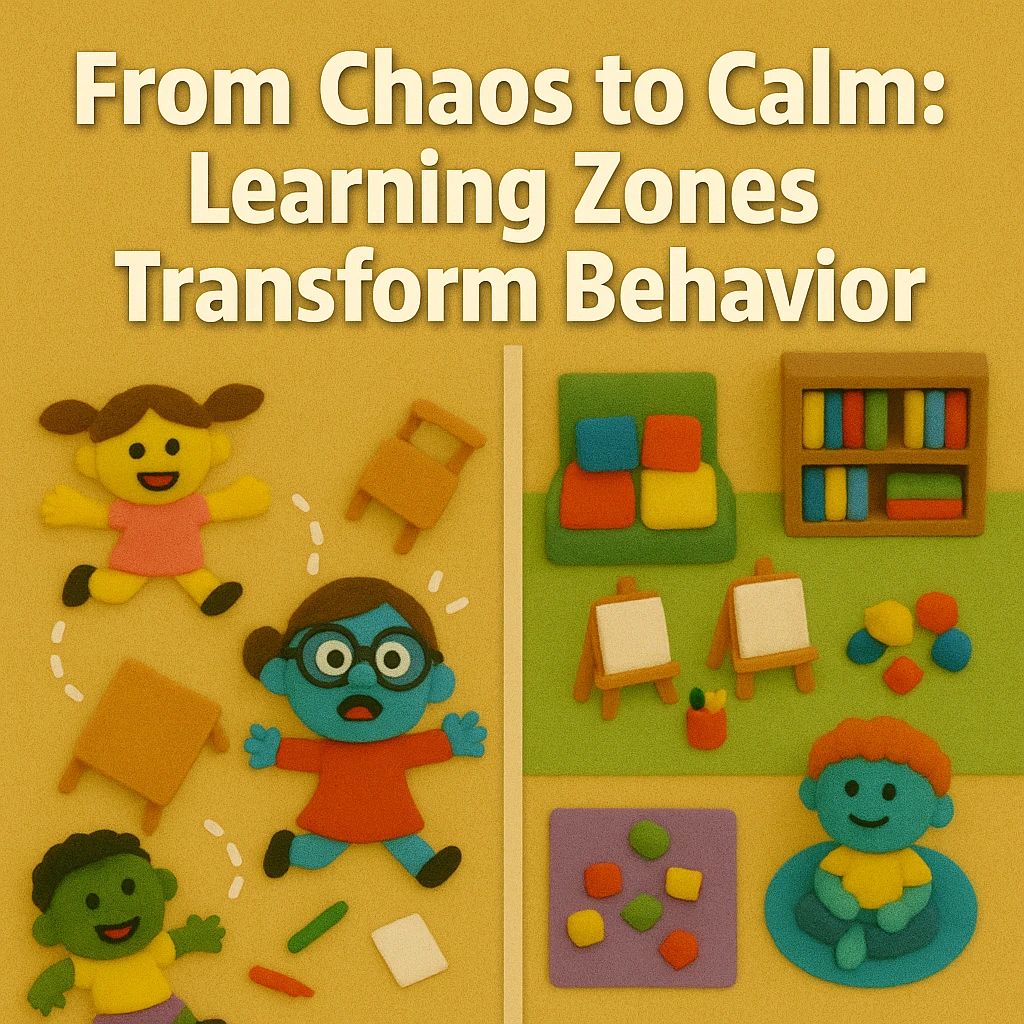
In many early years classrooms, noise and distraction can quickly dominate. Teachers often try new routines or behavior charts to restore order, yet the solution may rest in how the classroom itself is arranged. Recent studies on early years classroom design reveal a consistent pattern: children behave and learn better when their environment is divided into clear learning zones.
A learning zone is a defined area created for a specific purpose. It might be a cozy reading nook, a table for small-group projects, or an open carpet space for movement and play. When children can see and sense that each area has a unique function, they naturally adjust their expectations and energy levels. Their brains connect each space with the behavior it requires. A soft rug surrounded by books signals calm focus, while a building area filled with blocks invites cooperation and lively discussion.
Across the research, classrooms with established learning zones experience up to a forty-percent reduction in disruptions compared with open layouts. Children in these rooms also solve conflicts independently more often because the physical structure offers clear boundaries that limit competition for space and materials.
Three elements make zones effective.
Visual boundaries: Use furniture, rugs, or floor tape to define edges. Even low shelves can create gentle separation without closing the room.
Consistent purpose: Each zone should support one main type of activity. Mixing too many functions in one area confuses children and weakens their sense of routine.
Intentional transitions: A short signal or ritual helps children reset between zones. It might be a sound, a hand gesture, or a brief breathing exercise that shifts the class from active to calm.
Establishing zones requires thoughtful planning rather than costly changes. Start by observing areas that often attract clutter or conflict. Could the reading corner feel clearer? Could art materials move to a creative zone away from the quiet space? Small adjustments often create noticeable improvements.
After introducing the zones, track one simple measure: how often you need to redirect behavior. Most teachers notice fewer reminders within two weeks. The improvement strengthens teacher confidence and gives children a sense of independence within structure.
This approach connects classroom management directly to how the environment is arranged. Instead of repeatedly asking for quiet, teachers let the room itself communicate expectations. The result is a calmer atmosphere, smoother transitions, and more time for meaningful learning.
Thanks for reading!
We love helping teachers make learning creative, hands-on, and fun. If this post inspired you, please share it with a fellow teacher or tag us on social media. It really helps our community grow!
EDU Groove, Stay groovy!