

The 3-Minute Visual Transition Toolkit That Saved Me 30 Minutes Every Day
Reading time: 5 minutes
Have you ever added up how much teaching time disappears during transitions?
Children drift between activities. Instructions get repeated again and again. Energy rises just as focus should settle. Moving twenty or more young learners from one task to another can feel like herding cats.
For years, this was my daily reality. Transitions were the loudest, messiest, and most draining part of the day. Then I introduced a simple visual transition toolkit, and everything changed.
Why transitions are so hard for young children
Transitions demand a lot from developing brains. Children are asked to stop one activity, process new instructions, regulate emotions, and move their bodies, often all at once. When expectations live only in verbal instructions, many children struggle to keep up.
Visual cues change that. They give children something concrete to focus on. Instead of guessing what comes next, children can see it. That clarity reduces stress and resistance almost instantly.
The visual transition toolkit
This toolkit has three parts. Each one is simple on its own, but together they create a powerful system.
1. Activity cards
I use picture cards to show each part of our daily routine. These cards are displayed in order on a visual schedule board at child height. As the day progresses, we refer back to the board constantly.
Children learn to anticipate what comes next without asking. The schedule becomes a shared reference point rather than something held only in the teacher’s head.
2. Transition signal
Instead of raising my voice, I use a small hand bell paired with a visual “listening” card. When children hear the bell and see the card, they know a transition is coming.
This signal stays consistent every day. Over time, children respond automatically. The room settles faster, and I save my voice for teaching instead of crowd control.
3. Next step cards
For many children, knowing that a transition is happening is not enough. They also need to know exactly what to do next. That’s where next step cards come in.
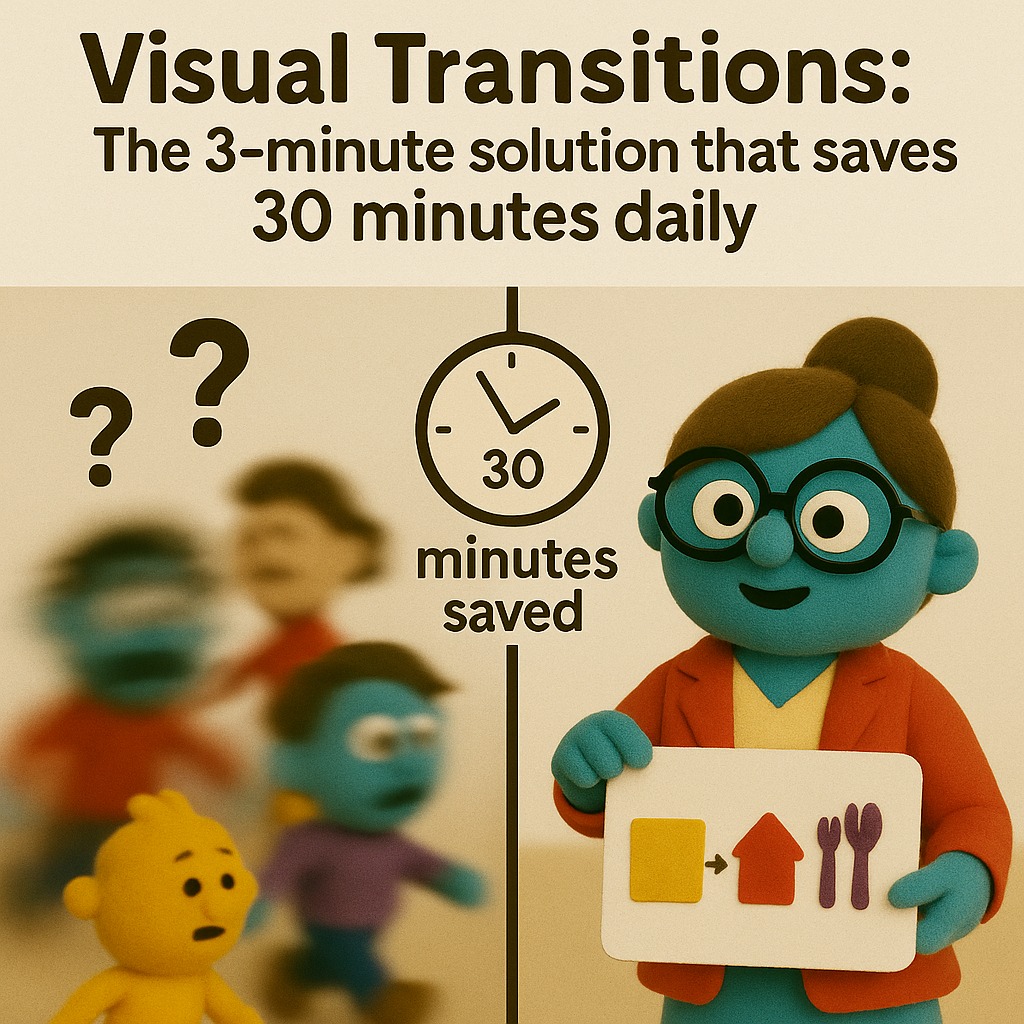
These are simple visuals that show actions like cleaning up, lining up, or sitting on the carpet. I hold up the card as the transition begins, so expectations are clear without lengthy explanations.
Why the system works
When these three elements work together, children can see what is happening now and what comes next. That visibility removes uncertainty, which is often the real cause of resistance during transitions.
Children no longer rely on repeated verbal reminders. They begin to manage themselves. Some even start prompting peers by pointing to the schedule or next step card.
What changed in my classroom
The results were immediate and noticeable:
-
Instructions were repeated far less often
-
Behavioral issues during transitions dropped
-
Children showed stronger independence and self-regulation
-
Around thirty minutes of teaching time was gained each day
That extra time showed up everywhere. Lessons felt calmer. Activities ran longer. I had space to support learning instead of constantly redirecting behavior.
Easy to create, easy to maintain
The best part is how quick this toolkit is to make. A few printed images, some laminating, and you’re ready to go. There’s no need for expensive resources or complicated systems.
Once created, the toolkit becomes part of the classroom routine. It supports children without adding more work for the teacher.
A final thought
Children crave predictability. When expectations are clear and visible, they rise to meet them. Visual transition supports don’t just make the day smoother. They help children build skills they’ll use long after they leave your classroom.
What visual supports have made the biggest difference in your transitions?
Thanks for reading!
We love helping teachers make learning creative, hands-on, and fun. If this post inspired you, please share it with a fellow teacher or tag us on social media. It really helps our community grow!
EDU Groove, Stay groovy!