

How a Simple Story Basket Transformed Classroom Storytelling
Reading time: 4 minutes
Storytime can be one of the most magical parts of an early years day, but keeping every child engaged from start to finish is not always easy. Attention drifts, fidgeting begins, and some children listen without truly understanding. The answer in my classroom came from a single low-cost idea: the story basket.
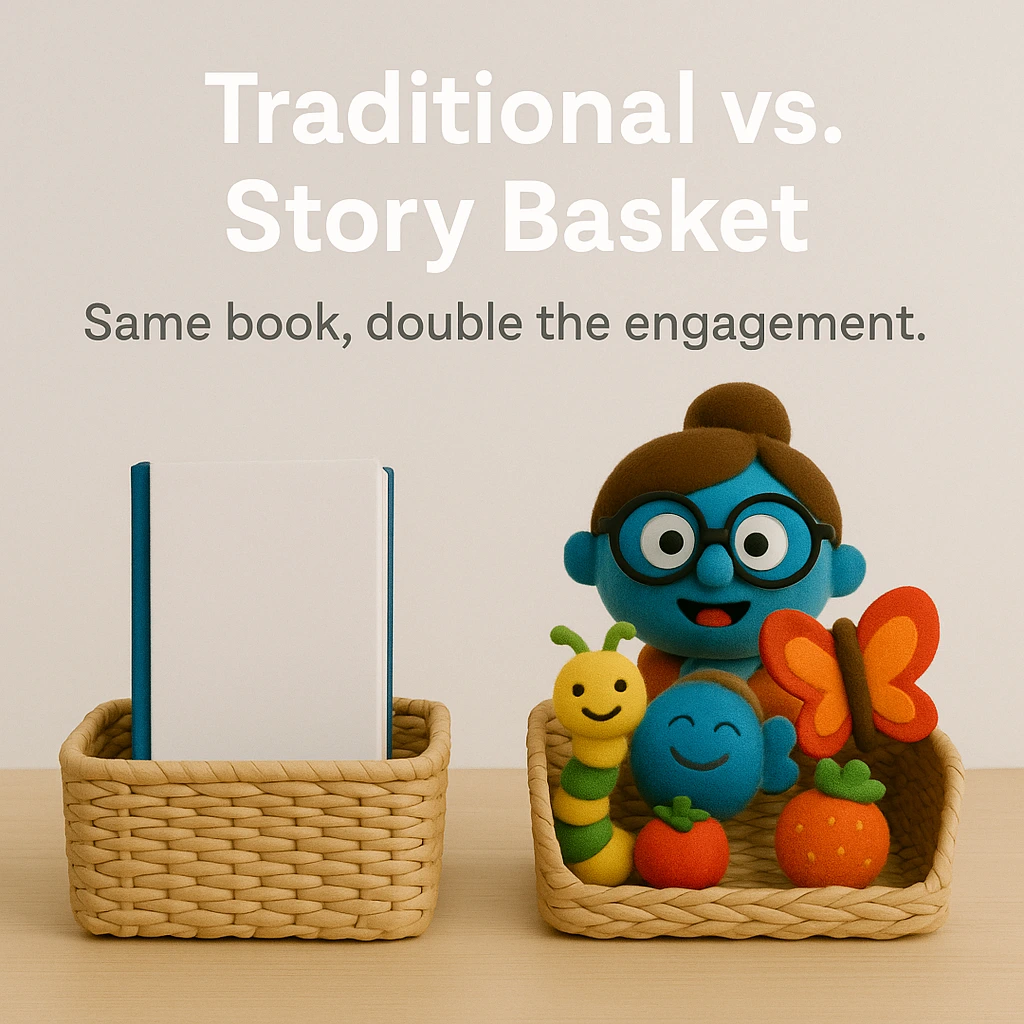
A story basket is a small collection of physical objects that connect directly to a story. When children can hold and explore items related to what they hear, listening changes from passive to active. They see, touch, and move through the story rather than only hearing it.
How to Create a Story Basket
-
Choose a familiar book. Pick a story your class already enjoys.
-
Select five to eight related props. These can be puppets, toys, or real-world items that appear in the story.
-
Place them in a small basket or box. During the read-aloud, pass the basket around or let children handle the objects as you read.
The basket brings language to life. When I introduced story baskets in my reception class, comprehension improved almost immediately. Eighty percent more hands went up during question time. English-as-an-additional-language learners linked new words to real objects. Children who usually struggled to sit still stayed focused for the entire story. During free play, they began retelling stories with the same props, showing genuine understanding rather than simple recall.
Why It Works
Story baskets build multi-sensory engagement. As children listen, they also see and feel symbols of key story elements. This dual processing strengthens memory and vocabulary. For learners who benefit from movement or touch, the props provide a safe outlet for energy while still keeping attention on the story.
A Real Example
One of my favorites is The Very Hungry Caterpillar. The basket includes a small toy caterpillar, a butterfly, a cocoon made from a sock, and a set of plastic fruits. The total cost was under five pounds and took ten minutes to assemble. The effect, however, lasted for weeks. Children began sequencing the story on their own and even created new “hungry” creatures during play.
Extending the Idea
Story baskets can also strengthen home-school connections. One teacher I know set up a lending library of baskets for families to borrow at weekends. Parents said the props helped them talk about stories in ways they never had before.
Getting Started
If you are new to this approach, begin with one book and a few everyday objects. Watch how your class responds, then adjust. The goal is not to add complexity but to create opportunities for children to link language with experience.
Story baskets remind us that effective teaching tools do not need to be expensive or complicated. Sometimes a few items, a well-loved book, and a circle of curious listeners are all it takes to deepen understanding and spark joy in reading.
Thanks for reading!
We love helping teachers make learning creative, hands-on, and fun. If this post inspired you, please share it with a fellow teacher or tag us on social media. It really helps our community grow!
EDU Groove, Stay groovy!