

Why Outdoor Learning Is Essential for Early Years Development
Reading time: 5 minutes
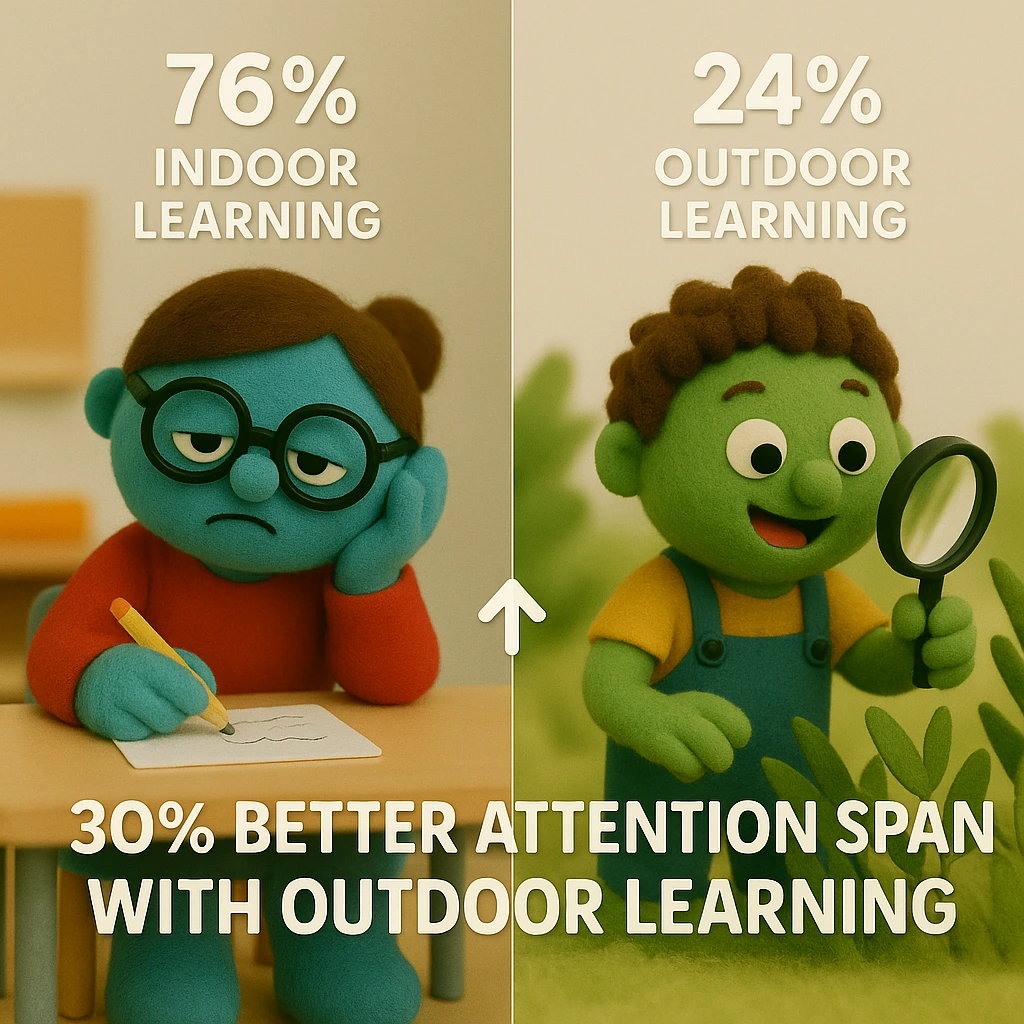
Only one in four early years children learn outdoors each day, even though research consistently connects outdoor experiences with stronger attention, behavior, and cognitive growth. This gap limits movement, curiosity, and the kind of learning that thrives on exploration.
A large Norwegian study followed young children across several kindergartens and compared their progress with the number of hours they spent outdoors. The results showed clear improvements among children who regularly took part in nature-based play. They displayed better attention skills, smoother behavior, stronger teamwork, and greater independence. When back inside, they concentrated more effectively and engaged more deeply with classroom activities.
These outcomes reflect what many early years teachers see in practice. Outdoor settings invite investigation and problem-solving. Climbing uneven ground develops balance, looking under leaves sharpens observation, and sharing tools during gardening builds cooperation.
Despite these benefits, many children still spend most of their time indoors. The NHS advises at least three hours of physical activity each day for preschoolers, including outdoor play, yet one in six parents say their child does not meet that level. Schedules, safety concerns, or limited space often reduce opportunities to go outside.
Why outdoor learning matters
Natural environments stimulate many senses at once, providing experiences that classrooms rarely match. The colors, textures, and sounds of outdoor spaces activate diverse brain pathways that strengthen memory and understanding. Time in fresh air and natural light also helps children regulate emotions and maintain focus.
Practical ideas for outdoor learning
-
Grow something together. A few pots or a small herb box create daily opportunities for observation and care.
-
Make nature observation a habit. Spend ten to twenty minutes each day exploring, collecting, or recording changes in the environment.
-
Hold one lesson outside. Read stories under a tree, count natural objects, or measure shadows to connect subjects with real experiences.
The most effective programs integrate outdoor activity with learning goals instead of treating it as extra playtime. Literacy, mathematics, and science all gain depth when connected to the world beyond the classroom walls. A lesson about weather, for example, becomes vivid when children have felt the breeze and watched clouds move overhead.
Evidence from multiple studies and countless classrooms points to the same conclusion: consistent outdoor learning strengthens focus, collaboration, and overall wellbeing. More importantly, it builds curiosity that lasts well beyond early childhood. For early years educators, creating time in nature is not a luxury—it is a foundation for healthy development and joyful learning.
Thanks for reading!
We love helping teachers make learning creative, hands-on, and fun. If this post inspired you, please share it with a fellow teacher or tag us on social media. It really helps our community grow!
EDU Groove, Stay groovy!