

Finding the Right Noise Level in Early Years Classrooms
Reading time: 5 minutes
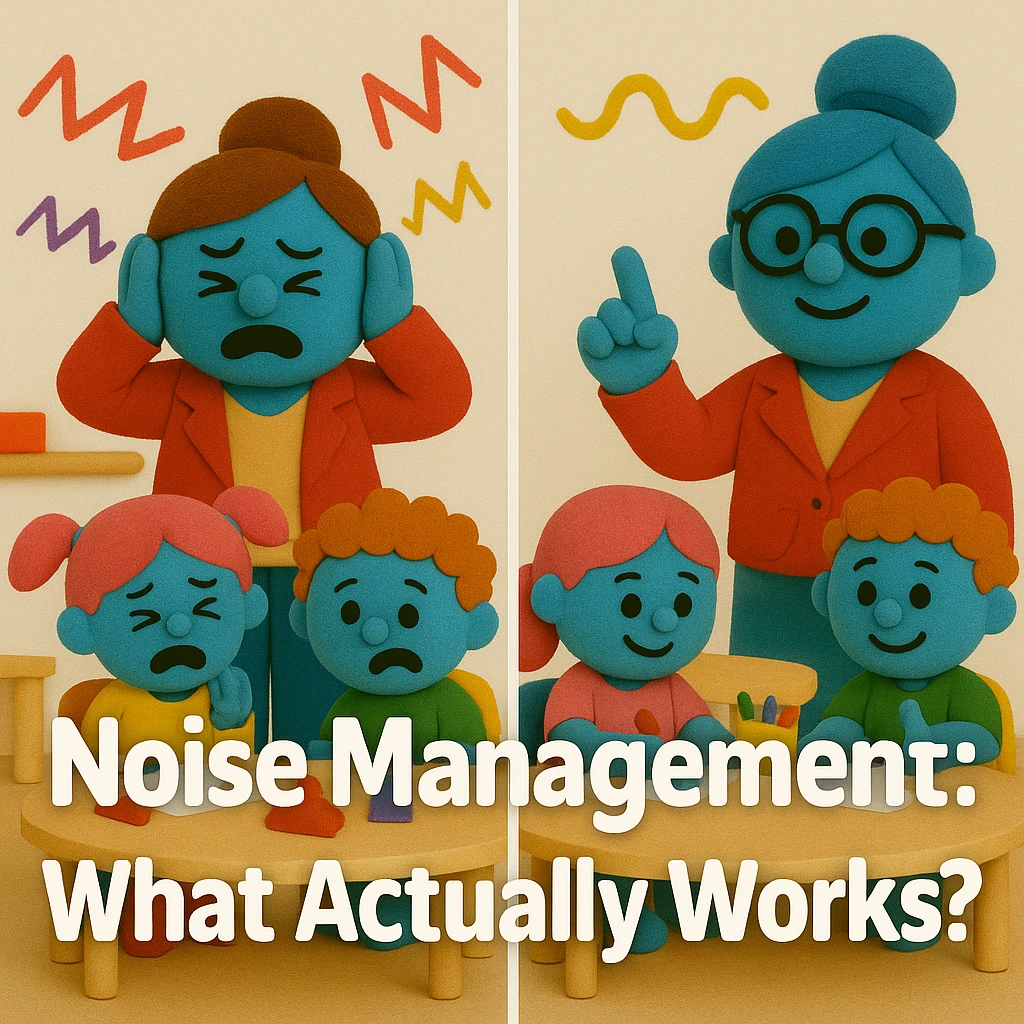
Every teacher knows that silence rarely equals learning. A lively classroom often means children are curious, collaborating, and engaged. The task is to keep that energy balanced without letting it overwhelm focus. Managing sound in an early years setting is not about stopping noise but shaping it so it supports learning.
Across my own experience, I have tested many ideas: light systems that shift color with rising volume, call-and-response signals, sound-absorbing furnishings, headphone stations, and even “quiet critters” that rest on tables during work time. Some methods succeed for a while, but finding one approach that works every time remains difficult.
Research shows that ongoing noise affects attention, memory, and emotional wellbeing. It raises stress levels for both teachers and children, and it can disadvantage those with hearing or sensory sensitivities. Yet total quiet is not ideal either. Productive sound—the gentle hum of teamwork and discovery—can help concentration and strengthen relationships.
Strategies that help find the balance
-
Shared expectations
Begin the year by setting sound guidelines with the class. Let children act out what “discussion level” or “quiet focus” sounds like. Involvement encourages ownership. -
Visual reminders
Use colored lights, hand signs, or posters to signal when volume needs adjusting. Visuals save teachers from repeating instructions. -
Thoughtful room design
Rugs, curtains, and cushions absorb echo and soften speech. Even a slight rearrangement of tables or shelves can redirect sound. -
Rhythmic cues
Short songs, claps, or gentle percussion cues can signal transitions. Rhythm captures attention more effectively than raised voices. -
Calm resets
A brief breathing activity or minute of stillness allows the group to recentre before starting a new task.
Noise management is about communication and consistency. When routines feel familiar, children know when to speak, listen, or move. Teachers can guide the rhythm of the room rather than control it moment by moment.
The most effective approach depends on the group’s temperament, class size, and room layout. Observation is key. Listen for when sound supports learning and when it begins to distract.
Every classroom carries its own rhythm. With patience, practice, and clear structure, that rhythm can stay balanced—lively enough for joy and steady enough for thinking.
Thanks for reading!
We love helping teachers make learning creative, hands-on, and fun. If this post inspired you, please share it with a fellow teacher or tag us on social media. It really helps our community grow!
EDU Groove, Stay groovy!