
Making Learning Visible: How Visual Documentation Transformed Our Early Years Assessments
Reading time: 6 minutes
For years, early years teachers have relied on written observations and long checklists to track progress. While these tools provide structure, they often miss the depth and feeling within a child’s learning journey. Words alone cannot always show the excitement of discovery, the cooperation during play, or the confidence that grows through problem-solving.
One reception class decided to replace most written assessments with short videos and photo sequences. The goal was simple: record authentic learning as it happens and share it with families in real time.
From Paperwork to Picture Books of Learning
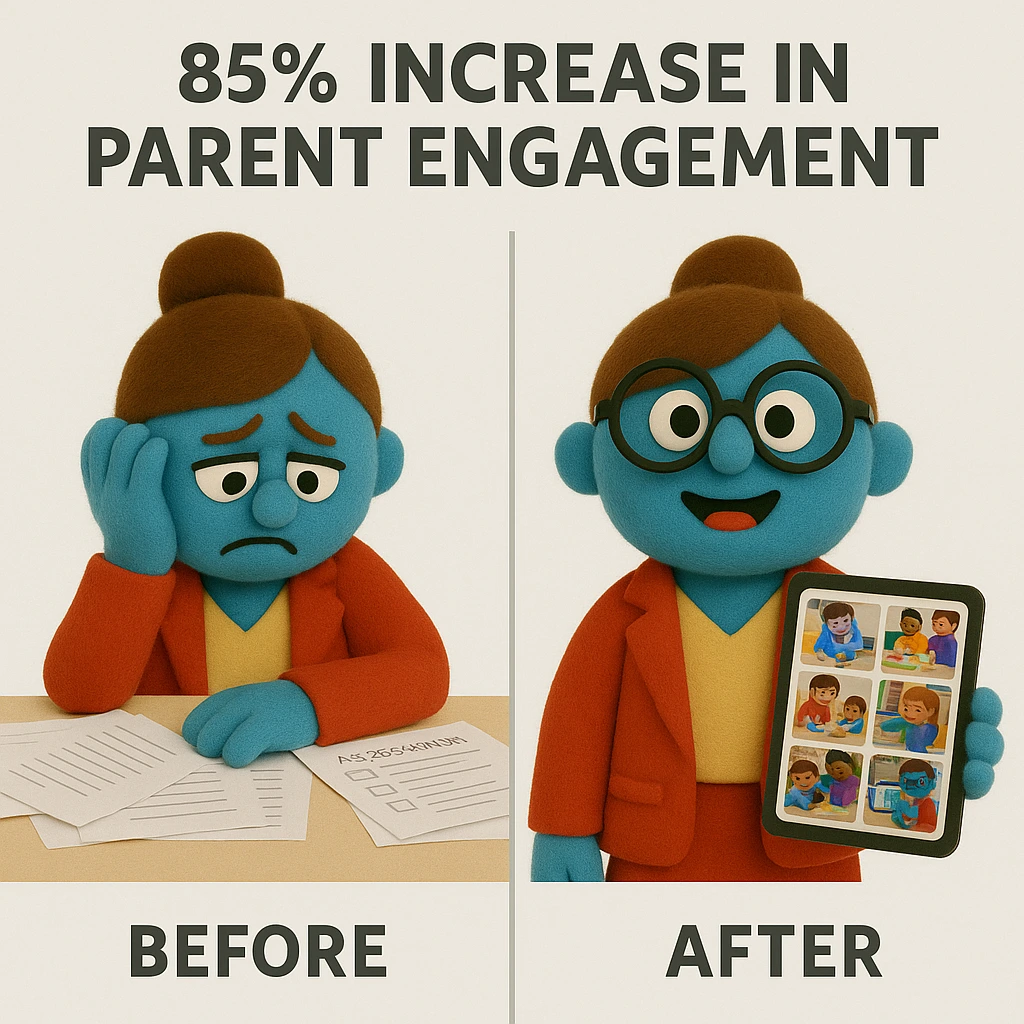
Before the change, teachers spent more than seven hours each week writing detailed notes. These records were thorough but time-consuming, leaving little space for reflection or immediate feedback. After moving to a visual system, teachers filmed or photographed key learning moments instead. Each clip took only a few minutes to capture but revealed far more than a written paragraph could.
The Results
Within the first term, parent engagement in learning conversations rose by eighty-five percent. Families said the visual updates helped them understand not only what their children were learning but also how they were learning it. Teachers reported gaining forty percent more accurate developmental insights because visual evidence revealed patterns that written notes might miss.
Planning also became more responsive. Teachers could review the footage at the end of the day, identify genuine interests, and adjust activities for the next morning. Documentation time dropped by about three hours a week, giving staff more time for direct interaction with children.
“I can finally show parents what I mean when I say their child is developing spatial awareness or collaborative skills,” explained Ms Thomas, the lead teacher. Parents shared her enthusiasm, saying the approach helped them feel part of classroom life and confident about extending learning at home.
How It Worked
The process needed very little equipment:
-
One classroom tablet with secure storage
-
A clear shared digital folder system
-
A short daily review to tag and store clips
-
A weekly selection of the most meaningful moments for sharing
These small steps formed a smooth routine that soon felt natural.
Why It Matters
Visual documentation does more than record progress. It invites teachers, children, and families to see learning together. It turns assessment into a story everyone can follow. For children, it builds pride and reflection. For parents, it opens a window into the classroom. For teachers, it replaces long paperwork with useful insight.
When assessment becomes visible, engagement grows. Visual documentation reminds us that learning is not only measurable; it is observable, shareable, and worth celebrating.
Thanks for reading!
We love helping teachers make learning creative, hands-on, and fun. If this post inspired you, please share it with a fellow teacher or tag us on social media. It really helps our community grow!
EDU Groove, Stay groovy!