

How the First 10 Minutes Shape the Next 6 Hours
Reading time: 5 minutes
Walk into any early years classroom and you can feel the mood within seconds. The first ten minutes decide whether the day begins with calm focus or scattered energy. Those few moments are the foundation for everything that follows.
Over the years, I’ve learned that nothing transforms classroom culture faster than a thoughtful morning greeting ritual. When children enter an environment that feels predictable and welcoming, they shift into learning mode almost immediately.
Why the First Moments Matter
Children read emotional cues far faster than words on a page. What happens at the door sets the emotional tone for the rest of the day. The start of class can either build trust and belonging or spark anxiety and disconnection.
Think about what those first few minutes can do:
-
Build emotional security
-
Strengthen the sense of belonging
-
Set clear expectations
If we overlook them, the result is often confusion and tension that ripple through the morning.
Real Stories from the Classroom
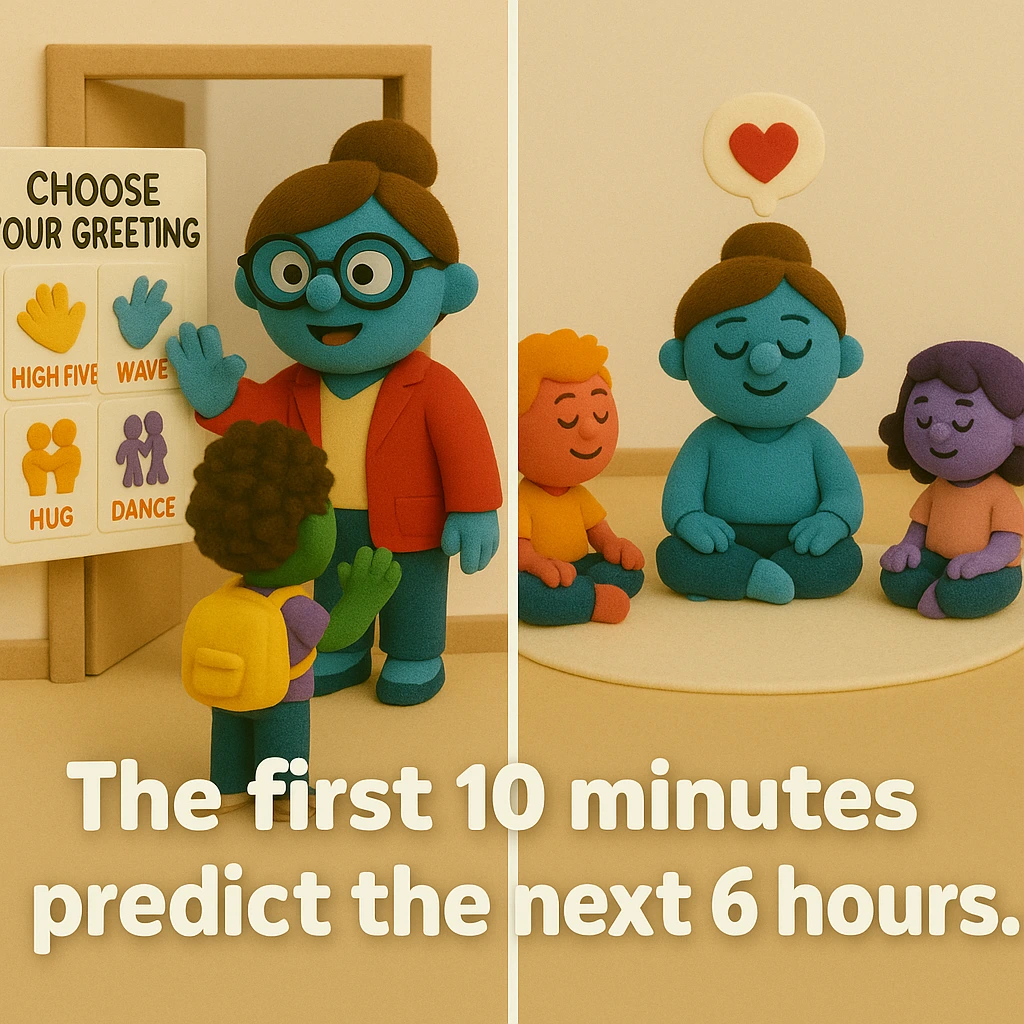
One teacher I supported saw behavioral incidents drop by 78% after she introduced a greeting choice board. Each child chose how to say hello: a wave, high five, hug, or short dance move. That small bit of autonomy gave students control over their own comfort and energy.
Another teacher replaced hectic arrivals with a calm five-minute connection circle. Each child shared one word about how they felt that morning. It created space for empathy and awareness before lessons even began. Transition meltdowns almost disappeared.
Both teachers discovered that intentional connection saves time later. When children start the day feeling seen and valued, they’re far less likely to seek attention through disruption.
The Science Behind Morning Rituals
This isn’t just feel-good practice. Research shows that predictable morning routines lower cortisol levels in young children, preparing their brains for focus and memory retention. In other words, emotional regulation and cognitive readiness go hand in hand.
When the first ten minutes of the day feel safe and consistent, the brain can devote its full energy to learning rather than threat detection. It’s biology working in our favor.
Designing Your Own Ritual
Creating a meaningful greeting doesn’t require extra time or materials. The goal is consistency and authenticity. Here are a few ideas to start:
-
Offer greeting choices such as handshakes, waves, or smiles.
-
Use music or soft lighting to create a calm tone.
-
Begin with a simple question: “How are you feeling today?”
-
Include visual cues for children who thrive on routine.
Small details matter. The way you greet each student communicates that they belong and that the classroom is a safe place to grow.
Building a Culture of Connection
Morning rituals are not just charming routines. They are intentional strategies that strengthen social-emotional learning. When children feel connected, their motivation rises, and cooperation follows naturally.
Start tomorrow by choosing one greeting ritual and commit to it for a week. Watch how the class energy shifts. Those ten minutes at the start of the day can transform everything that comes after.
Your morning ritual is more than routine; it’s neuroscience in motion.
Thanks for reading!
We love helping teachers make learning creative, hands-on, and fun. If this post inspired you, please share it with a fellow teacher or tag us on social media. It really helps our community grow!
EDU Groove, Stay groovy!