
How Rhythm Sticks Transformed My Classroom Focus
Reading time: 4 minutes
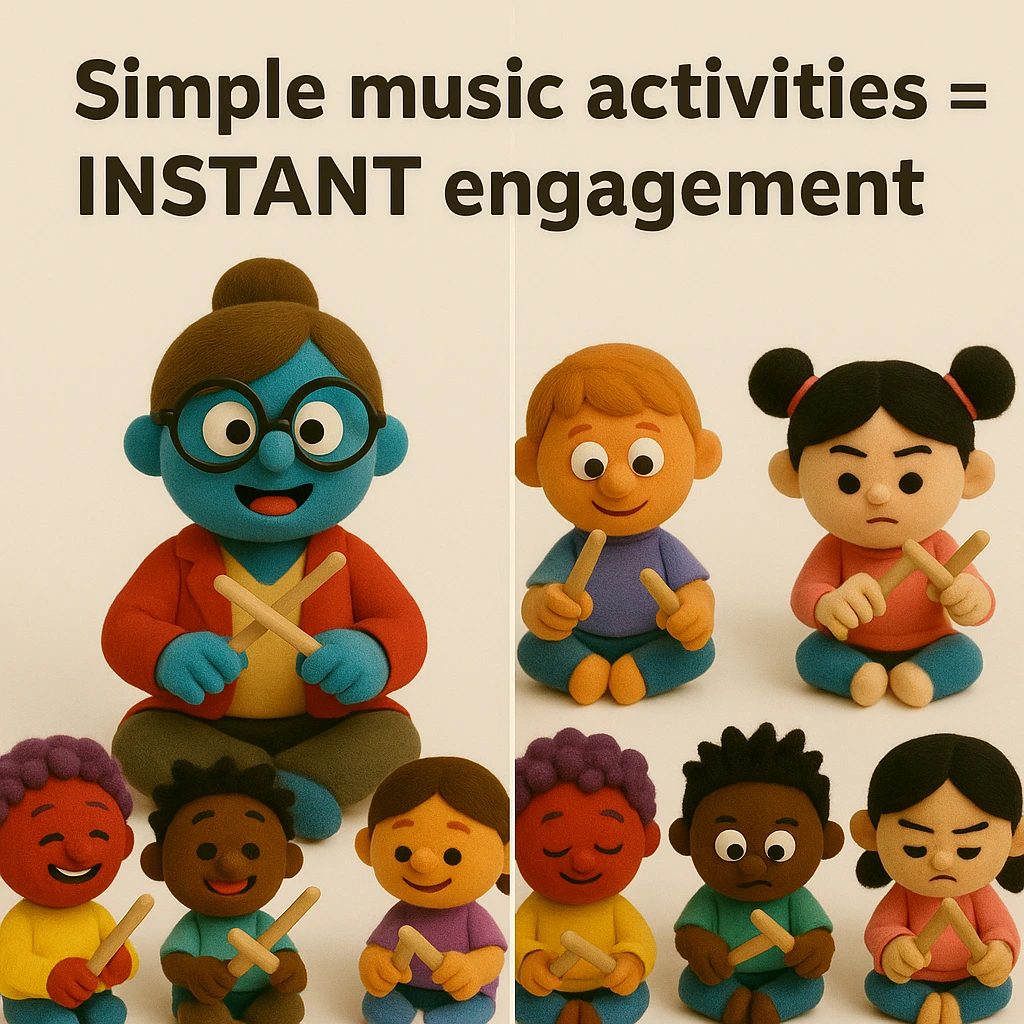
Music has an almost instant way of capturing attention. In early years classrooms, it turns restless energy into rhythm and teamwork. Yesterday, I introduced a rhythm-stick activity to my pre-K group, and the change in focus happened within seconds.
Children who usually found it hard to sit still began tapping, listening, and smiling in time. Every face was engaged. The best part? They were learning essential cognitive and language skills without even noticing.
Why Music Works in Early Years Learning
Music activates several areas of the brain at once. Studies show that regular music activities can increase cognitive development by nearly thirty percent. Rhythm patterns also strengthen memory, language comprehension, and emotional control. For young learners, this combination supports the skills they need for reading, social play, and self-regulation.
Setting Up Rhythm Sticks
The setup could not be simpler:
-
Materials: Two short wooden dowels per child. They cost less than ten dollars in total.
-
Step 1: Begin with short call-and-response beats. Children copy your rhythm and learn to anticipate pauses.
-
Step 2: Move to “echo” games. Children create short patterns for the group to repeat.
-
Step 3: Connect rhythms to familiar words or names. Tapping syllables in “but-ter-fly” or “El-la” links sound with language.
Within minutes, the class shifts from scattered energy to shared concentration. The rhythm becomes a signal: when the sticks begin, everyone listens.
The Classroom Impact
During the session, every child participated. Even the quietest learners joined in because the activity removed the pressure of words. It also encouraged teamwork as children listened closely to one another. After fifteen minutes, the group had not only followed multiple rhythmic sequences but also invented their own. Listening improved, coordination strengthened, and confidence grew.
Music activities like this offer structure without restraint. They allow movement and creativity while still guiding attention. The physical element of tapping satisfies sensory needs, making it ideal for children who benefit from kinesthetic learning.
Extending the Idea
You can adapt rhythm sticks for almost any age group. In literacy lessons, use them to mark syllables or highlight rhyming words. In math, use patterns to reinforce counting or sequencing. For emotional regulation, slow rhythms can signal transitions or help the class calm after playtime.
Adding recorded music introduces another dimension. Play gentle background tracks and let children tap along to the beat. Gradually, they begin predicting rhythm changes and creating new combinations.
Why Sharing Matters
The most effective classroom ideas often come from fellow teachers. When educators share their tested activities, everyone benefits—especially the children. A simple idea like rhythm sticks can grow into a larger toolkit of music-based strategies that nurture focus, joy, and connection.
Early years classrooms thrive on participation and movement. When rhythm becomes part of daily learning, engagement follows naturally. The sound of tapping sticks may seem small, but it carries the beat of attention, cooperation, and genuine delight in learning.
Thanks for reading!
We love helping teachers make learning creative, hands-on, and fun. If this post inspired you, please share it with a fellow teacher or tag us on social media. It really helps our community grow!
EDU Groove, Stay groovy!