

Emotion Puppets: A small station that improved behavior and emotional language in eight weeks
Reading time: 4 minutes
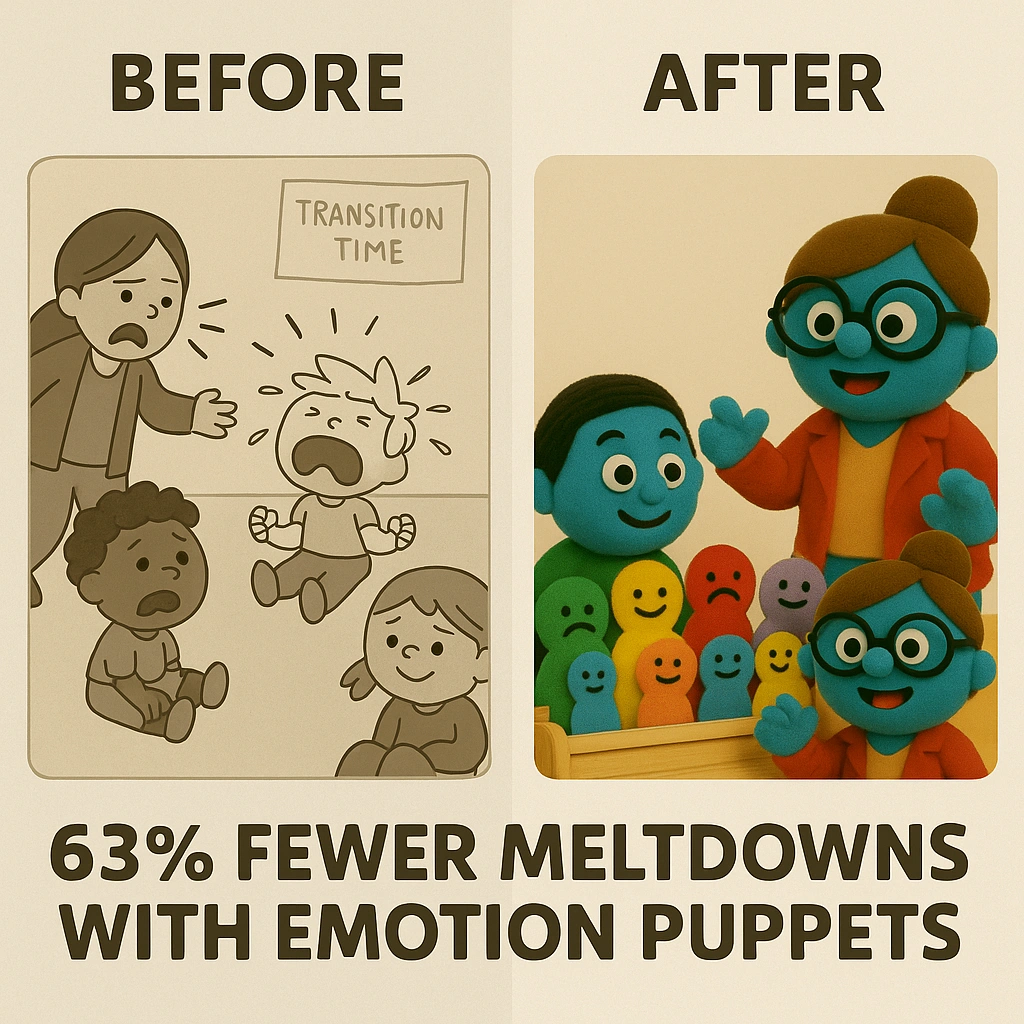
In one preschool classroom, a basket of puppets made learning calmer and clearer. When Ms. Rivera set up an emotion-puppet station, classroom meltdowns fell by sixty-three percent across eight weeks, and children began naming feelings on their own.
The challenge
Daily transitions brought three to five meltdowns, which stopped lessons and unsettled the group.
The approach
A small center held six characters that each represented a feeling: happy, sad, angry, scared, calm, and excited. A short teacher guide supported language modelling and quick conversations.
Daily use
-
Morning circle: five minutes of puppet role-play to explore feelings and choices
-
Transitions: short teacher-led skits that modelled emotion words and coping steps
-
Open access: children visited the station when they felt overwhelmed
The results
-
Meltdowns dropped from nineteen per week to seven after eight weeks
-
Children used emotional vocabulary without prompting
-
Parents reported clearer communication at home
-
Instructional time increased by twenty-two minutes per day
The children who had found transitions hardest became the most engaged users and often coached peers through big feelings. As Ms. Rivera shared, “Puppets gave children a safe way to express emotions.”
Why it works
Puppets make feelings concrete. Children can point, speak through a character, and rehearse language that fits the moment. This practice builds self-regulation, empathy, and confidence while returning valuable minutes to teaching.
Getting started
You can set up the station with our EDU Groove Emotion Puppets and the companion Teacher Guide, available in our worksheet app. The pack includes printable characters for six core emotions, step-by-step prompts, daily mini-scripts, and ideas for using puppets during transitions.
Quick setup
-
Print and assemble the six puppets
-
Place them in a small basket at child height
-
Add a two-minute “name your feeling” routine to morning circle
-
Use sample phrases from the guide during cleanup and line-ups
-
Invite children to coach the puppets through simple problems
With a few materials and consistent practice, emotion puppets help children understand themselves and each other while giving teachers a calmer, more focused room.
Thanks for reading!
We love helping teachers make learning creative, hands-on, and fun. If this post inspired you, please share it with a fellow teacher or tag us on social media. It really helps our community grow!
EDU Groove, Stay groovy!