

Building a Calm-Down Corner That Teaches Emotional Regulation
Reading time: 4 minutes
Every classroom experiences strong emotions, but preparation can turn those moments into growth instead of disruption. A calm-down corner, when designed with care, does more than comfort. It teaches children to recognise feelings, choose strategies, and return ready to learn.
In my own classroom, adding a calm-down space changed how children handled frustration and excitement. It became a structured place for reflection and emotional language, not a spot for punishment or withdrawal.
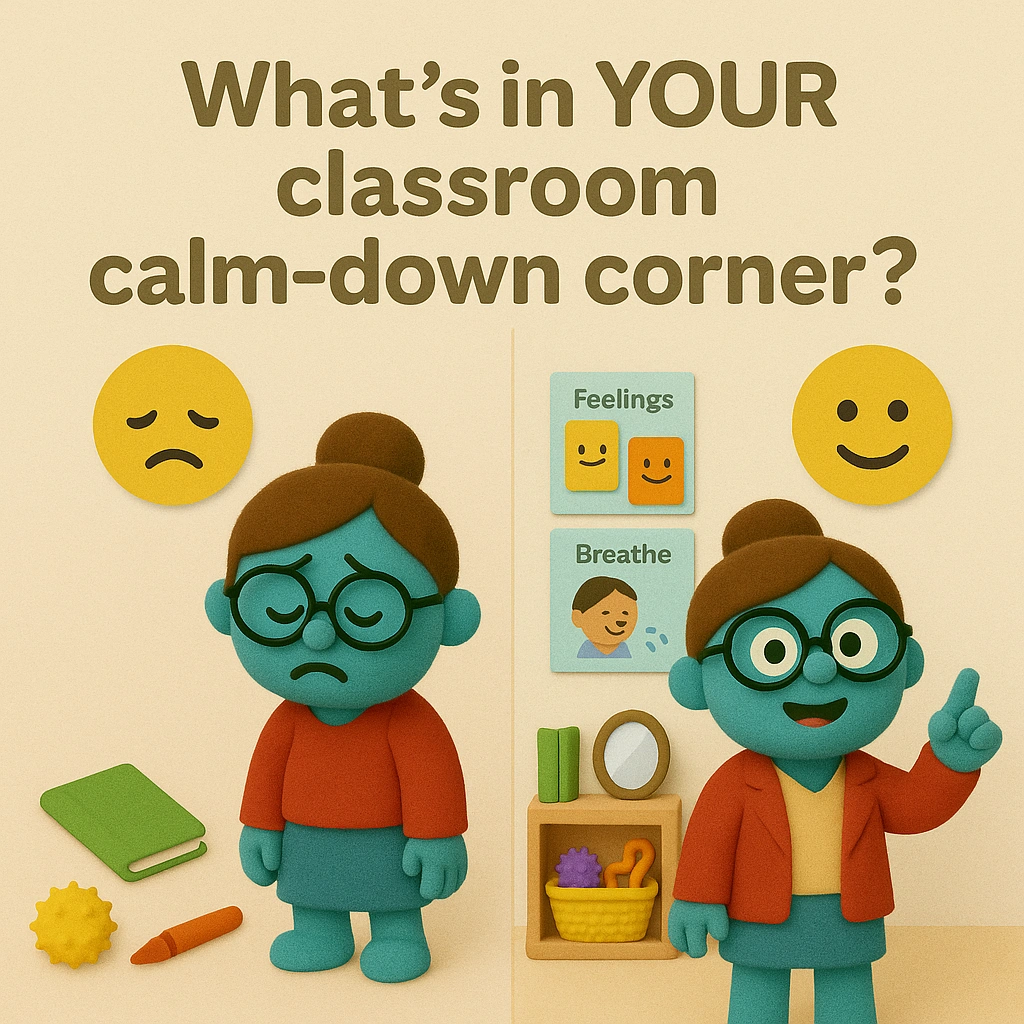
What’s Inside My Calm-Down Corner
-
Feeling cards: Each one connects an emotion to an action, such as “angry: squeeze the ball” or “worried: count five slow breaths.”
-
Sensory bin: Filled with kinetic sand and small gems to uncover, it keeps hands busy and attention grounded.
-
Mirror: Helps children observe facial changes and understand expressions.
-
Breathing cards: Simple visuals guide them through slow breathing patterns.
-
Timers: A sand timer and a digital one help children see how long their reset time lasts.
Why It Works
Before creating the space, emotional outbursts regularly interrupted lessons. After introducing it, those incidents reduced noticeably. Children now choose to visit the corner when they sense overwhelm and return within minutes ready to continue.
This approach works because it combines independence with guidance. Children control when to use the space but rely on familiar tools to support regulation. Over time, they connect words to feelings and learn that emotions can be managed safely.
Creating Your Own
A calm-down corner requires little equipment. A few visual aids, one sensory material, and a clear routine are enough. Keep it visible and consistent, and model how to use it during group lessons so children see it as a regular support, not a consequence.
If you already use the EDU Groove Emotion Puppets and Emotion Guide, include them here. The puppets can act out calming strategies during circle time, then join children in the corner for guided practice.
Every child deserves tools to understand emotions, and every teacher deserves a classroom where big feelings lead to learning instead of interruption. With a calm-down corner in place, those moments become opportunities for connection, understanding, and growth.
Thanks for reading!
We love helping teachers make learning creative, hands-on, and fun. If this post inspired you, please share it with a fellow teacher or tag us on social media. It really helps our community grow!
EDU Groove, Stay groovy!